


Earlier this week, Manhattan Research published an interesting study looking at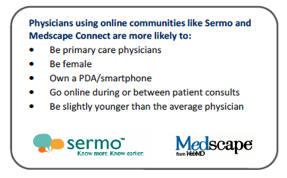 how many physicians are using online social networks like Sermo and Medscape’s Physician Connect. According to the research firm’s press release about the study “60% of physicians [are] already using or interested in using physician online communities.” In addition, the company reports that active or interested physician social networkers tend to prescribe more drugs.
On the surface, this study would appear to give cheer to pharmaceutical marketers interested in communicating with physicians via social networks. Is there something about social networks that encourages doctors to prescribe more medicines? Pharmaceutical Executive seems to think so. The publication suggests the "prescribing trend [highlighted in this study] could be due to the almost ‘viral’ nature of chat forums and bulletin boards. If one doctor talks about a positive reaction his or her patient had with a treatment option, other physicians could be more apt to prescribe it.”
In order to answer this question more clearly, Manhattan Research (or another company) would need to conduct an analysis to determine whether:
• There is a statistically significant difference in prescribing patterns between non and active PCP social networkers (they would need to control for age, region, patient population and other important factors)
• Prescribing patterns of social networkers are being influenced by a therapeutic category or drug class
• Specific content on a social network is changing physician attitudes and behaviors regarding certain medical conditions leading them to decide that prescribing more of drug X is clinically justified
Overall, I think the Manhattan Research study is valuable. However, because the question of whether social media content is influencing health and clinical behaviors is so important, studies desigined to answer this question need to be designed and interpreted carefully.
I think this is all about selection bias, and here is how you can prove it. Take historical prescribing information (just market value index based---total prescribing across all categories) and compare the values of 1000 physicians who joined a social network in a given period to a cohort of matched controls (same initial decile, specialty, geography, but no social network involvement) and see if there are jumps in prescribing.
Posted by: Chris P | February 5, 2009 9:41 AM | Permalink to Comment