


This article is part of a five-part series focusing on the biotech industry, Genzyme and Pulitzer Prize-winning reporter Geeta Anand’s book The Cure. Please click here to learn more about this series.
Peeling Back The Onion On The Biotech Industry:
Research, Patients & The Cure
The public has no clue about what’s happening at most drug firms. This was a major finding of a PricewaterhouseCoopers study released earlier this year. Consider what Brian Riewerts, partner at the company’s Pharmaceutical and Life Sciences Advisory Services Group, had to say about the research:
"As consumers share more of the cost of care and make their own decisions about health services and products, they will be far more sensitive to drug pricing-yet they clearly do not appreciate the cost and financial risks of drug research and development.”
I think that Riewert’s conclusions also apply to biotech firms. As highlighted in the previous installment, policymakers, the public and medical professionals are becoming increasingly concerned about the high cost of biotech medications – especially those designed to treat cancer. While the biotech industry currently enjoys a stellar reputation, criticism of biotech firms' pricing strategies could damage it.
Fortunately for industry insiders, Geeta Anand, Pulitzer Prize-winning reporter for the Wall Street Journal, has helped shed light on the high costs and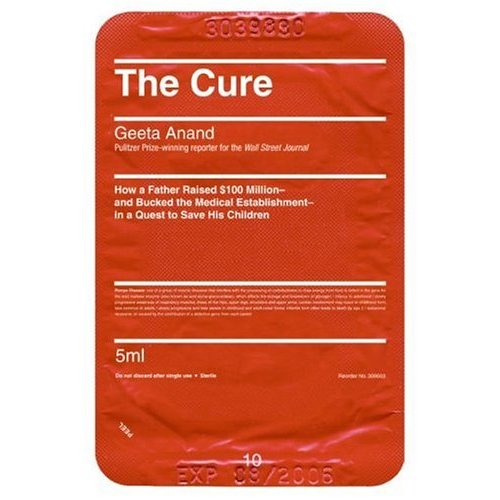 risks associated with biotech drug research and development. Her book, The Cure, focuses on biotech executive John Crowley’s struggle to find a cure for a devastating illness, Pompe Disease, afflicting two of his children. Pompe is a rare muscle condition cause by missing or defective enzymes. While Anand did not write The Cure to reveal the inner workings of biotech companies, the book provides a lot of interesting, and sometimes surprising, information. Following are a few excerpts from the book that I think reveal the inner workings of the biotech industry.
Ethics & Biotech Drug Research
In the latter part of her book, Anand relates the story of how Crowley, desperate to secure funding for his biotech Novazyme, went to extreme lengths to show investors that he was making progress on the company’s flagship product. He presented flawed data to a group of venture capitalists and was subsequently raked over the coals.
“McKinney smiled weakly and directed the group to look at the graph on his PowerPoint presentation on which he’d plotted the enzyme activity levels in . . . three treated mice. ‘Why are your results so variable?’ Roth asked. John focused for the first time on the fact that the enzyme activity levels in the three mice differed from one another by five or ten percentage points, realizing he was so far out of his league that he hadn’t even known this might be a problem. McKinney had drawn a nice straight line through the middle to show the average. ‘Well it may be due to the fact that it was hard to find the tail veins in the mice,’ McKinney said. ‘So some may have gotten more enzyme than others.’”
After the meeting, one of Crowley’s investors takes him out to lunch to discuss the data he presented. “‘The other day you and Tony presented your data as great. Not only was it poorly done, but it also wasn’t even good data. This business is full of people who are full of themselves and try to spin data. If you’re not careful, you’ll quickly develop a bad reputation. You’ve got to avoid getting a reputation as a shit polisher in this business. At our meeting the other day, you tried to polish the shit.’”
Why It Is So Difficult To Produce Biologics
Crowley attends a meeting with a potential business partner who will help test and develop Novazyme’s treatment for Pompe. The following exchange highlights why it is so difficult to manufacture biotech drugs.
“‘How are you getting the PTase?’ he began, using the abbreviation for phosphotransferase, the name for the first of the two processing enzymes Canfield planned to use to make his Pompe [treatment]. ‘We’re purifying it out of lactating bovine udders,’ Canfield responded. ‘Cows? Where are you getting the udders from?’ Roth [the potential business partner] asked. ‘The stockyards,’ Canfield said . . . ‘Never in a million years can you inject cow protein into people,” Roth responded, his tone angry. “The FDA would never allow it.”
‘What about the uncovering enzyme?’ asked Roth, naming the second processing enzyme Canfield needed to make his Pompe [treatment]. ‘Making it in T-293, taken from human kidney cells.’ Oh no—the FDA would never allow that either,’ Hurley [a regulatory expert] said. Her big eyes seemed to grow wider with each of Canfield’s answers. Kidney cells weren’t considered sterile enough to be used as a factory for growing enzymes or any other protein for human therapeutic uses.”
Patients’ Desperation For Effective Orphan Disease Treatments
After Crowley sold his company Novazyme to Genzyme, he helped plan a major study that resulted in a decision to stop testing two products. One was the enzyme he was developing at his old company, Novazyme. Another was a product referred to as the Pharming enzyme. After this decision, he and other Genzyme employees went to the Netherlands to explain to the press and public why they decided to stop work on this medication.
“[I]n late September, [Crowley] and a half-dozen other senior Genzyme managers and scientists flew to the Netherlands to explain their decision to drop the Pharming enzyme. Dutch newspapers had been filled with stories quoting panic-stricken patients and their families saying Genzyme was ceasing production of the very enzyme needed for their survival. . . . ‘This is not a decision we make lightly, believe me, John said . . . We are making sure we have enough enzyme to supply each and everyone of your needs -- even though it means many other Pompe patients in the world will have to wait longer, and perhaps even die, waiting to be treated [including his children].’”
Next Up . . .
I had the pleasure of meeting Anand at a promotional event she attended in New York City. I contacted her beforehand to let her know that I was working on a series about Genzyme and her book and to ask for an interview. She was kind enough to accept my invitation. The next, and final, installment of this series will feature my “virtual” conversation with Anand about her book and other subjects.
» New Series: The Biotech Industry, Genzyme & The Cure from HealthCareVox
Last year, I wrote an article, “Why Genzyme Should Start A Blog,” focusing on the controversy surrounding the company’s pricing strategy for Cerezyme. This medication is designed to treat Gaucher’s disease, a rare illness ... [Read More]
Tracked on: February 15, 2007 9:55 AM | Permalink to Trackback